
In reality there are an almost infinite number of factors that could contribute to making one car harder to drive than another. Not forgetting the most important component, the driver, whose inputs could either mitigate or exaggerate a car problem depending on their technique.
However there are a few general characteristics that we’ll discuss in this article, the first being.
Extreme Balance
For the most part, during a corner a car can be in one of two states:
Understeer, where the front axle breaks traction before the rear causing the front wheels to skate across the ground instead of biting and turning the car.
Or Oversteer, where instead the rear of the car loses grip before the front and the rear wheels swing out, rotating the car like a gyroscope (imagining how you would turn a shopping trolley is a good visualisation for this).
Generally, the ideal balance will be somewhere between these two extremes (at least when pure speed is the focus), and typically tending towards slight oversteer to take advantage its effect of rotating the car better.
When the car is not able to be run neutrally, (or is simply faster) to be run at one of the extreme ends of the scale, is when problems can arise for a driver.
Understeer is potentially the easier of the two to manage as the issue can be remedied purely with a change of technique/approach. This consists of, how the driver releases the brakes entering the corner and well… simply not going in as fast. The brake release is something each driver will naturally do slightly differently and as a result, the same car can feel very different for two drivers.
One man (or woman’s) understeer could be perfectly neutral for another.
So what is a driver trying to achieve with this mysterious brake release you may ask? Well when the car is understeering (front end not gripping) you want to give the front tyres more grip potential. The way you do this is by holding the brake deeper into the corner and (depending on the car and situation) braking harder. This gives you the maximum amount turning potential entering the corner, if you’ve still got understeer after making this adjustment then you’ve got a real problem. The key here is not to overdo it though, a lot of the time really forcing the car to turn when it doesn’t want to can cause more problems than it solves. An already struggling front tyre won’t appreciate you wringing its neck asking for more.
Now, oversteer…
This is the tricky one. The technique to manage extreme oversteer is opposite to understeer, using the brakes gently and softly, and frankly from that point of view its not necessarily more challenging. In racing esports, massively oversteering setups are normal and perhaps a necessity to be quick. There could be some correlation between that and the younger generation favouring that car balance but that’s for another article. So in the simulator, got oversteer, no problem.
However, in real life, with real life consequences of spinning off track and crashing, the differentiator between good and great drivers is purely confidence in their ability to control the rear, and lack of fear when you feel the sensation of the back of your car turning while your steering is still straight.
One way I like to visualise this is plane turbulence. Some people aren’t bothered by it at all and could even sleep through a bumpy ride, but others get tense as soon as it’s not smooth sailing.
It’s the same for racing drivers, not everyone has the same tolerance for that feeling of the rear of the car rotating, especially when you’re doing 150mph. Jenson Button is a driver that springs to mind, his great feeling and sensitivity made him formidable in conditions that required it, but that same sensitivity hindered him when his car was unstable as is sapped his confidence.
Max Verstappen is known to thrive on the limit of oversteer, his ability to manage the rotation of the car perfectly allows him to benefit from being able to turn faster when desired but not over-rotate the car and start sliding. Watching him drive cars like the RB15 and 16 where he barely corrects the steering while his teammates have massive oversteer moments and struggle to keep the car on track highlight not just his talent but also how cars like this can gradually erode the confidence of a driver if it doesn’t click.
Peaky
This is one way to describe a car that momentarily generates a lot of grip, then just as quickly takes it away. In the world of F1 this can be either a tyre or aerodynamic issue or both, but it is certainly not desirable either way. This characteristic essentially just causes uncertainty, as a driver you’re not quite sure what you’re going to get as you enter a corner, maybe the car won’t turn or instead the rear will snap round. Once again this issue can affect different drivers to varying degrees depending on their approach. If a driver tends to rely on their reactions more going into a corner this kind of uncertainty will affect them less. However if you’re not one to throw it in and see what happens, the lack of control and ability to predict what your car will do will likely cause you to hold back more than normal.
Taming this kind of car is all about putting your control freak tendencies to the side and just riding the rodeo.
Small Operating Window
While this is typically a term used to categorise a car that only works well in a limited number of setup variations. In this situation I’m using it to refer to a car that only likes to be driven one way. Most cars allow for some amount of variation in approach so each driver can execute their own unique style and still achieve the same lap time, some cars though really only respond well to one style. If that happens to be yours well your in luck, but for a driver that doesn’t naturally gel with the car this can be one of the hardest situations to get on top of. It essentially means uprooting your driving and starting from scratch. How you hit the brakes, how you release them, when you start to turn into the corner, how fast you start to turn into the corner, and a million other subconscious decisions need to be rewired to achieve that feeling of being at one with the car.
Previous McLaren drivers, Carlos Sainz and Daniel Ricciardo, both noted that they felt the car had to be driven in a very particular way. Sainz managed to adapt his driving to match (perhaps aided by not having his so style ingrained at that early point in his career), while Ricciardo struggled massively, and despite McLaren’s (probably misguided) attempts to coach him into driving the McLaren the way it demanded, he never managed to consistently sync up with the car and unleash his potential.
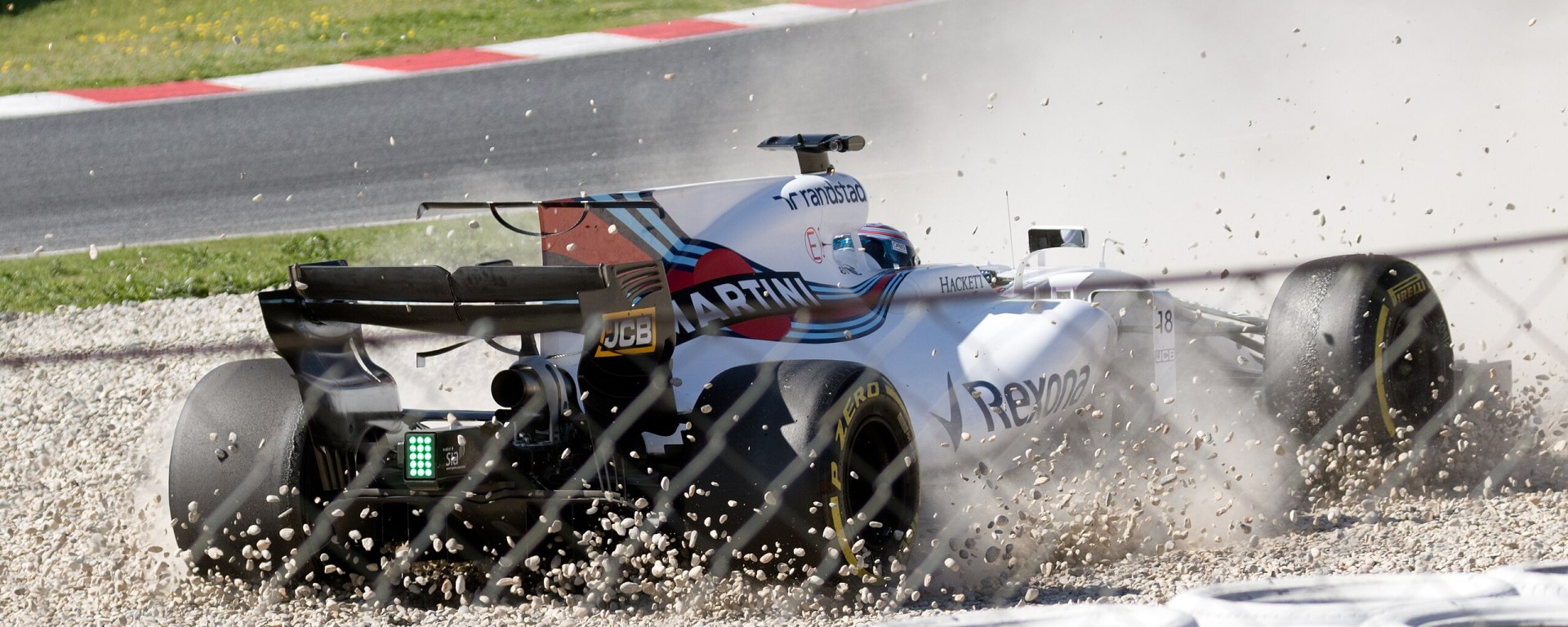
Header Image by Morio, CC BY-SA 3.0 https://creativecommons.org/licenses/by-sa/3.0, via Wikimedia Commons
 speedometernet.com